
Introduction: هو إيه اللي بيحصل لما بتدوس F5؟
عمرك سألت نفسك أول ما بتدوس dotnet run أو F5 في Visual Studio، الكود بتاعك بيمشي إزاي لحد ما يتنفذ على الـ CPU؟
ناس كتير فاكرة إن C# مجرد Managed Language عالية المستوى وخلاص، بس الحقيقة إن دوت نت بتعمل شغل هندسي جبار عشان تدي أداء قريب جداً من C++.
عشان تبقى Senior / Staff Architect شاطر بجد وتعرف تحل مشاكل الأداء والـ Latency Spikes في الـ Production، لازم تبقى فاهم الرحلة دي كويس: من C# syntax لحد ما يتحول لـ CPU Assembly instructions.
في المقال ده، هناخد الموضوع من أوله لحد الاحتراف:
The Compilation Pipeline (Roslyn vs CLR)
First-Call Mechanism (Method Tables & Trampoline Stubs)
Tiered Compilation (Tier 0 vs Tier 1)
Dynamic PGO (Interface Devirtualization)
On-Stack Replacement (OSR)
Production Deployment (ReadyToRun vs Native AOT)
1. The Compilation Pipeline: Roslyn vs. CLR
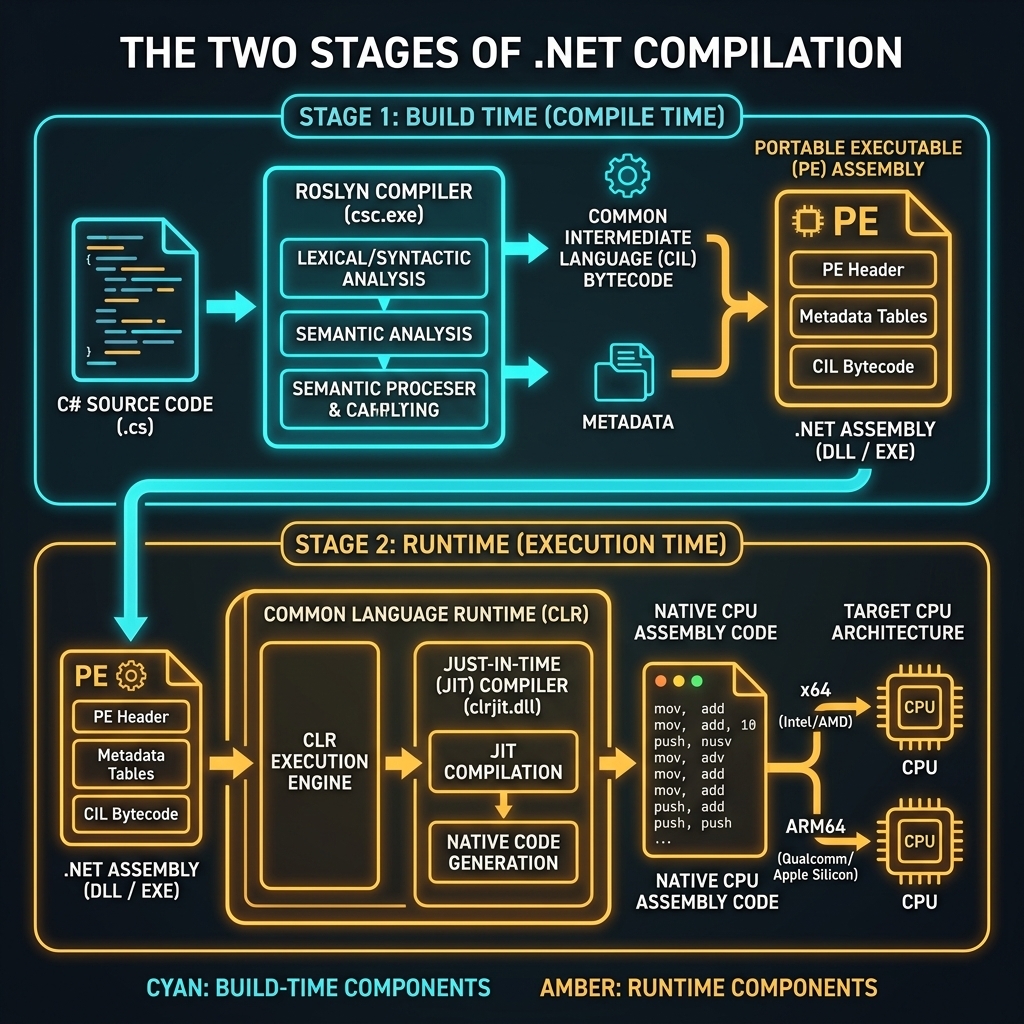
عملية تجميع C# بتتم على مرحلتين منفصلتين:
Stage 1: Build Time (Roslyn - csc.exe)
دور Roslyn: بيعمل Syntax check و Type checking، ويترجم كود C# لـ CIL (Common Intermediate Language).
الناتج: بيطلع PE Assembly (
.dllأو.exe) فيه:CIL Bytecode: instruction set محايد لـ Virtual Stack Machine.
Metadata Tables: جدول كاملا بيوصف كل الـ Classes، Structs، Methods، والـ Assembly References.
ملاحظة مهمة: Roslyn ما لوش دعوة بالـ CPU Machine Code خالص. الكود ده OS and CPU Architecture Agnostic.
Stage 2: Runtime (The CLR & JIT Compiler)
دور الـ CLR: الـ Execution Engine اللي بيدير الـ Memory، الـ GC، والـ Threads.
مترجم الـ JIT (
clrjit.dll): بياخد الـ CIL Bytecode المحايد ويترجمه لـ Native CPU Assembly خاص بالـ CPU والـ OS اللي شغالين حالياً (x64 أو ARM64).
2. Under the Hood: First-Call Trampoline Mechanism
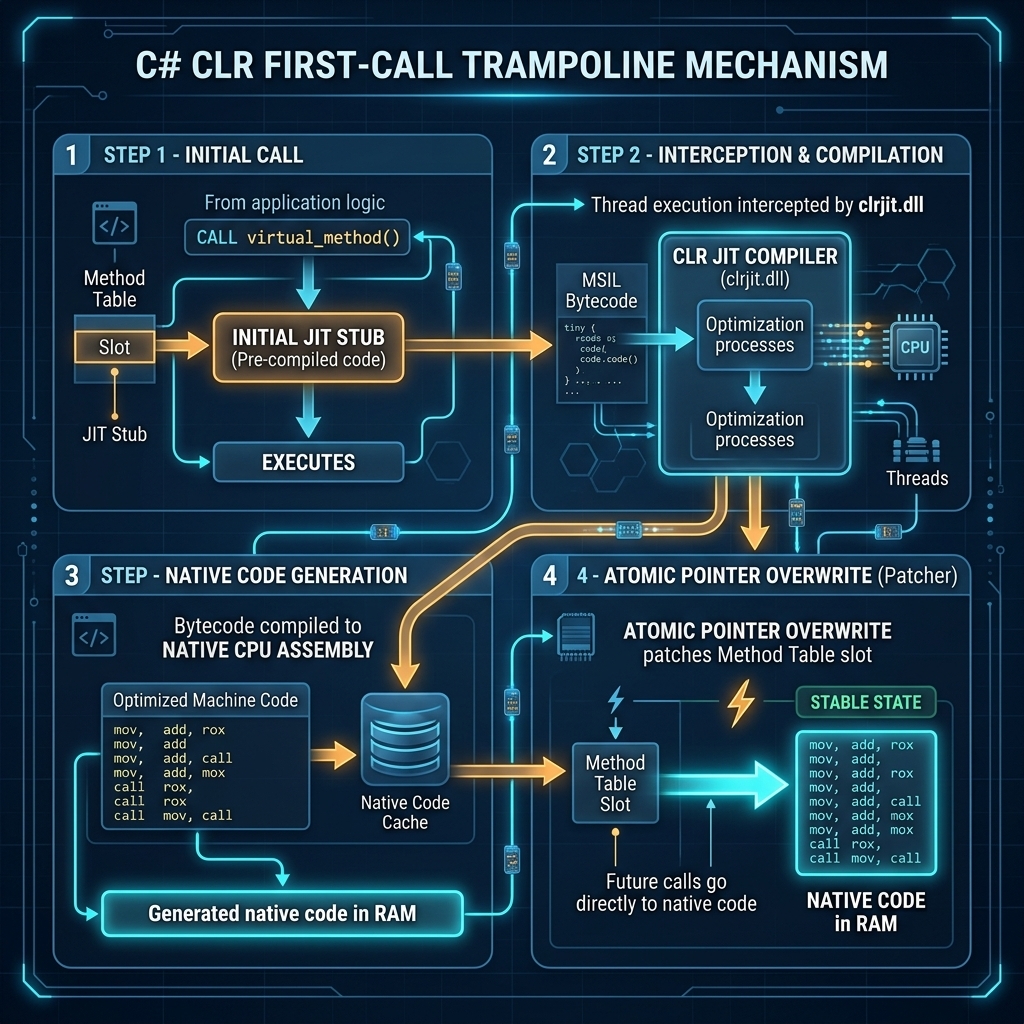
أول ما الابلكيشن يقوم، ولا دالة CIL واحدة بتكون مترجمة لـ Native CPU Code!
إزاي الـ CLR بيجمع الدوال On-Demand فقط من غير ما يقلل أداء الابلكيشن؟
Step-by-Step Mechanics:
Method Table Construction: لما الـ Type يتحمل في الـ Memory، الـ CLR بتعمله Method Table.
Trampoline Pointer: في الأول، كل Method entry في الـ Method Table بتشير لـ JIT Trampoline Stub.
First Call Interception: لما تنادي
Execute()لأول مرة، الـ Thread بيروح للـ Stub، والـ Stub بياخد الفرصة ويناديclrjit.dll.Compilation & Allocation: الـ JIT بيقرا الـ CIL Bytecode، يترجمه لـ Native CPU Assembly، ويخزنه في Executable RAM.
Atomic Slot Patching: الـ JIT بيعمل Atomic Overwrite للمؤشر اللي في الـ Method Table عشان يشير مباشرة لعنوان الـ Native RAM. في المرات اللي بعد كده، الـ Thread بيروح للـ Native RAM على طول مع Zero JIT Overhead.
3. Tiered Compilation & Dynamic PGO
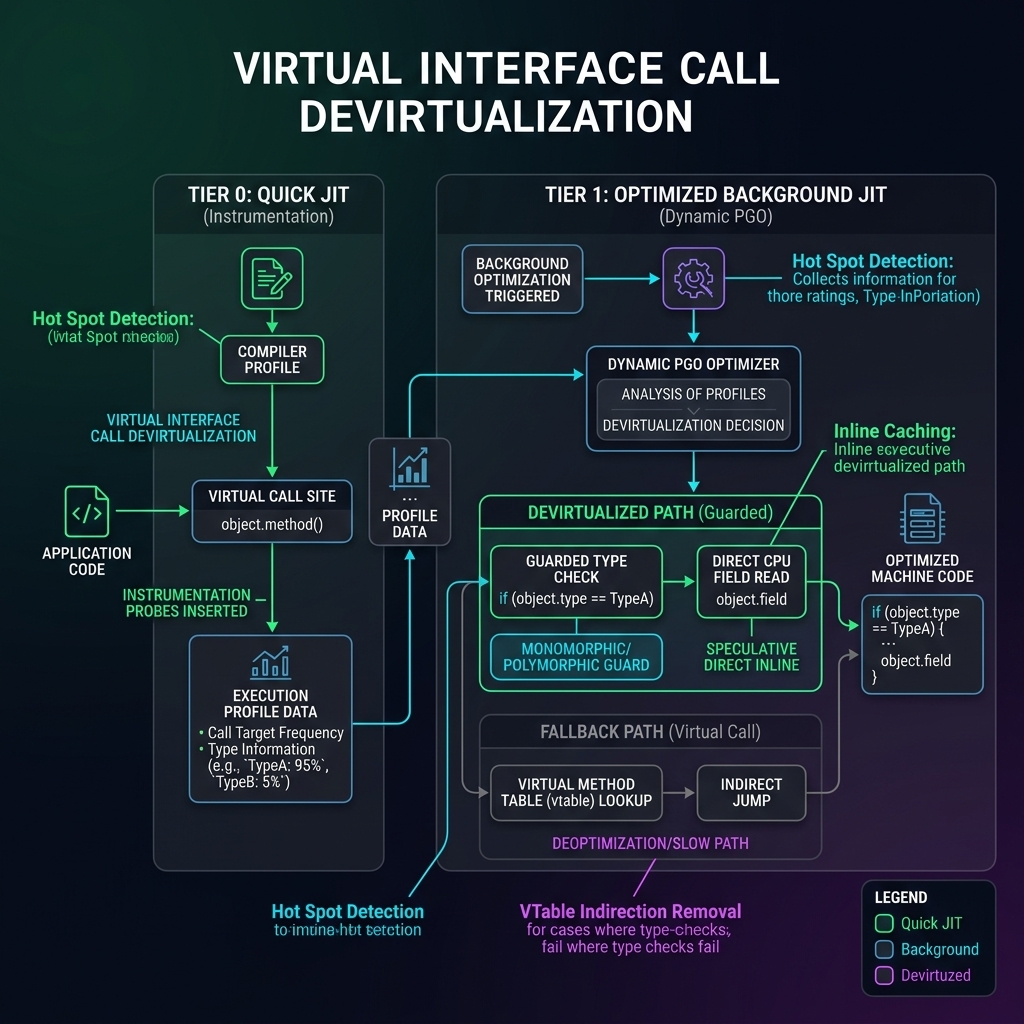
عشان دوت نت تجمع بين الـ Fast Startup Time والـ Peak Steady-State Throughput، بتستخدم Tiered Compilation مع Dynamic PGO.
Tier 0 (Quick JIT / MinOpts)
Goal: Fast startup time.
Mechanics: بيجمع الـ CIL لـ Native Code في ميكرو-ثواني بدون Heavy Optimizations.
Instrumentation: بيحط Probes صغيرة تقيس الـ Execution paths وتعرف الـ Concrete Types اللي بتمر جوه الـ Interfaces.
Tier 1 (Optimized JIT)
Goal: Maximum steady-state throughput.
Mechanics: لما الدالة تبقى Hot Method (بتتنادي كتير)، Background Thread بيعيد تجميع الدالة بـ Heavy Optimizations زي (SIMD Vectorization, Loop Unrolling, Method Inlining).
4. Dynamic PGO: Interface Devirtualization
شوف كود C# ده:
Without PGO (Traditional Interface Dispatch):
في كل لفة جوه الـ Loop، استدعاء items.Count بيمر بـ Virtual Stub Dispatch (VSD):
Dereference للـ Object pointer عشان يجيب
MethodTable*.Search في الـ Interface Map عن
IList<int>.Indirect call (
call [rax + 0x30]).Result: 3 Memory dereferences لكل element، مفيش Inlining، و CPU branch mispredictions.
With Dynamic PGO (Tier 1 Transformation):
الـ Tier 0 Probes اكتشفت إن 99.9% من الوقت items هو List<int>. الـ Tier 1 JIT بيعيد تحويل الـ Assembly لمكافئ الكود ده:
5. Mid-Execution Optimization: On-Stack Replacement (OSR)
لو دالة اتنادت مرة واحدة بس، بس جواها Loop بتلف 1,000,000 مرة؟
من غير OSR، لأن الـ Call Count مساوي 1، الدالة هتفضل محبوسة في Tier 0 البطيء.
Solution: On-Stack Replacement (OSR)
الـ JIT بيعد الـ Loop Backedge Iterations في Tier 0.
لما الـ Loop تعدي threshold معين (زي 1,000 لفة)، Tier 1 بيتجمع في الـ Background.
الـ CLR بيوقف الـ Thread لحظة، بيعمل Stack Frame Swap (OSR)، ويكمل تنفيذ الـ Loop في منتصف الطريق جوه Tier 1 Native Assembly!
6. Production Deployment: ReadyToRun vs. Native AOT
لما تنشر Microservices على الكلاود (زي Kubernetes)، اختيار الـ Compilation Strategy بيحميك من الـ JIT Cold-Start Latency Spikes.
Architectural Comparison Matrix
Feature | Standard JIT | ReadyToRun (R2R) | Native AOT |
|---|---|---|---|
Compilation Time | Runtime (On demand) | Build Time + Runtime | 100% Build Time |
Startup Speed | Slow (JIT overhead) | Fast (Pre-compiled) | Instant (< 10ms) |
JIT Compiler Present? | Yes | Yes (Full CLR active) | No |
CIL Present in DLL? | Yes | Yes | No |
Reflection Support | 100% Full | 100% Full | Restricted / Trimmed |
Dynamic Code Gen | Supported | Supported | Not Supported |
Memory Footprint | Moderate | Moderate | Minimal (Lowest RAM) |
Architecture & Interview Summary Cheat Sheet
Roslyn (
csc.exe) بيجمع C# لـ CIL Bytecode + Metadata محايد.CLR JIT (
clrjit.dll) بيجمع الـ CIL لـ CPU Native Machine Assembly وقت التشغيل.First-Call Trampoline: مؤشرات الـ Method Table بتشير لـ Stubs. أول استدعاء بيجمع الكود وبيعمل Atomic Overwrite للمؤشر لـ Native RAM.
Tiered Compilation: Tier 0 بيجمع سريع جداً، و Tier 1 بيعيد تجميع الـ Hot Methods بـ Heavy Optimizations في الـ Background.
Dynamic PGO: بيستخدم Probes يعمل بيها Guarded Devirtualization، يحول الـ Interface VTable Lookup لـ Inlined Direct Memory Read.
OSR (On-Stack Replacement): بيعمل Stack Frame Swap في منتصف الـ Loop عشان يرقي الـ Loop الشغالة من Tier 0 لـ Tier 1.
ReadyToRun (R2R) بيبني Pre-compiled Native Code جوه الـ DLL مع بقاء الـ CLR. أما Native AOT فبيطلع Standalone Native Binary بدون CIL وبدون JIT.